Appalachian Sustainable Agriculture Project - Home

Home > Research > Case Studies > Early Girl Eatery


Buy Local - Buy Appalachian Local Food Guide!
Local Food Guide

Home

Local Food Campaign

Growing Minds

Calendar

Partners

Vision and Mission

Links

Contact


Early Girl Eatery: Reaping the Benefits of Conscience

By Ginger Kowal

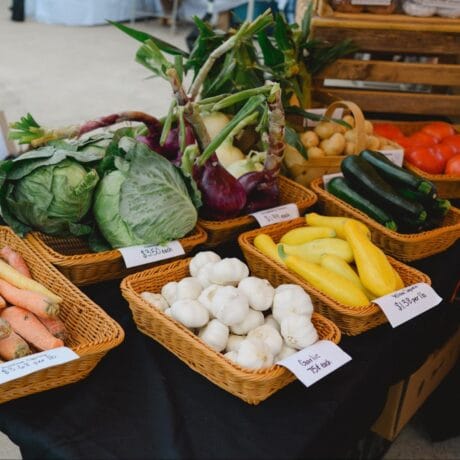
John and Julie Stehling opened Early Girl Eatery in a small building on Wall St. in downtown Asheville in September of 2001. In a city where excellent restaurants seem to come and go with each season, Early Girl has not only weathered the last five years but has emerged as one of the most popular eating destinations in Asheville, with a reputation that has spread nationally. The restaurant features local food at all times of the season, although you won’t find it prominently advertised on the menu or on the specials board. John Stehling has worked personally with area farmers since even before the restaurant opened, and as the movement towards local food has expanded in the region, so have his local offerings.

Early Girl has been distinguished from its beginnings by its fealty to regional cuisine and its understated devotion to the local community. “It’s always been important to me to give back to my community,” John says. “I grew up with that value. Working in the restaurant business, I knew I wouldn’t have a lot of time or money to give to the community, so working with local providers as much as I can is one way that I can do that.” Over time, John has watched the idea of local food become much more fashionable in the restaurants around him and across the country. “We’ve never really gone out of our way to advertise our local stuff,” he explains. “Buying locally is something that’s important to me personally, and so it’s always been important on a business level too.” It has worked out nicely, however, that these attributes of the business that are personally meaningful to John happen to be meaningful and attractive to his customers, as well.

After working in restaurants in Vermont, Massachusetts, Colorado, and Charleston, South Carolina, John moved back to the mountains that he had loved as a child. He started Early Girl with a strong focus on comfort food, made from scratch from healthy ingredients – the food that he had grown up with. “I wanted to stick with the food that I was good at preparing, the food that I liked preparing,” he says. The customers that come to Early Girl, and especially those that return (and most do) respond to the wholesome, healthy food cooked Southern style. “People who come here really care about health, the environment, and they’re looking for the local fabric of the area. I think they really appreciate the feeling of healthy, clean, small, family atmosphere that our restaurant provides. And that’s what they get with our local products.”

This positive response from customers, and the word of mouth through the community that has always been the restaurant’s primary means of advertising, is what fills Early Girl’s tables for every meal and creates crowds of waiting customers on Wall Street at Sunday morning brunch time. But John insists that he buys locally because he knows it’s the right thing to do – not because it helps his annual sales. Six months before the restaurant opened, he and his wife Julie made trips around western North Carolina to find local farms to source from. “We did the legwork ourselves,” says John. “Now with ASAP’s work to identify and promote local farmers, especially with the Local Food Guide, that kind of thing is a lot easier.”

And the numbers reflect this. In the first year of business, Early Girl was buying 50% of its cheeses, 40% of its meat, and 30% of its produce in season locally. “We were careful not to advertise our local purchases much when we first started, because we wanted to be really sure that we could walk the walk, and really follow through on buying local before we started telling people about it.” Even now, local products aren’t featured except in small, consistent ways: “Our waitstaff is well informed, so that when customers ask about our products they can find out if they’re local. And we put a little tidbit on our menu about our local farmers, and when we have local specials we mark them that way. But we don’t make a big deal out of it.”

Though buying locally has always been a part of John’s personal value, it hasn’t always held such value in the wider market. Over the years, John has watched as a trend towards healthy, natural and local foods has grown to include more and more people, and more and more restaurants in the area. “As the world becomes more homogeneous and unified,” he explains, “I think people are looking for identity and uniqueness, something distinguished from the rest. Part of that is in our vegetables, our food. People can find that in local food.”

As the local food movement in western North Carolina has become stronger, more producers have started to make their products available to local chefs. Early Girl has also become known, especially among produce growers, as a dependable buyer of local products. “People call all the time,” John says. “And if a friend at another restaurant is buying from a local person that I don’t know, I’ll tell them to pass my name along to the grower.” Citing factors like increased availability, increased production from some key farm partners, increased communication between local producers and local buyers, and relationships with individual growers that have grown stronger over time, John says that his purchases of local products in all categories have grown since the opening of the restaurant. Local purchases of meat have increased to 75%; cheeses to 70%; fish to 50%; and produce in season to 60%. Also, because of new offerings from growers in the area (most notably Fullam Creamery), John has been able to start offering local dairy – something that he says he would love to be able to do more of.

Over the years, John has found ways to tweak his recipes to be able to use local ingredients. Instead of using Vermont cheddar, he now uses local farmstead cheese from Yellow Branch Farm; when he added a cheeseburger to the menu using Springhouse Meats beef, he was able to increase his local meat purchases hugely with just that one item. The amount of local food that he is able to purchase from producers is a delicate balance between demand from customers, supply from producers, and storage capacity at the restaurant – some of which he has been able to modify over time.

Because it is part of his culinary style to make Early Girl’s food from scratch, it doesn’t present a large problem to receive raw ingredients from individual growers. The most important piece of being able to buy locally, John says, is staying flexible. “There was definitely a learning curve at first,” he mentions. “Both I and the growers had to learn to be flexible with each other, to maintain communication, and to build our relationship.” “Because we have an abundance of local providers here, I can choose who I want to work with. And the people that I want to work with are straightforward with me, they tell me what they have and when something’s not working.” And once he establishes that relationship with a grower, he remains loyal. “I’ve been buying grits from the same man for years,” starts one story. “He’s ninety-two years old now. And if someone else were to come to me and offer me a better price, I wouldn’t take it. This man and I have a personal relationship. We take care of each other.”

The growth of the local food movement in western North Carolina is not in isolation. “I’m glad to see larger communities of activists working on environmental problems,” says John. “And as the numbers of people who make a personal effort to support buying local grow, the whole movement will grow. If enough people are involved with something, they can really create a big change.” And as a member of this movement, and having been very successful in it, he says: “I’m just happy to be a part of it.”

Find the Early Girl Eatery in the Local Food Guide!

TOP

Home

Send comments or suggestions to webmaster@asapconnections.org

©Copyright 2005 Appalachian Sustainable Agriculture Project
729 Haywood Rd., Asheville, NC 28806 -Join the ASAP E-mail List serve
Voice: 828-236-1282 or fax: 828-236-1280 email: info@asapconnections.org
Appalachian Sustainable Agriculture Project is a 501(c)(3) nonprofit organization.

Google
Search WWW Search asapconnections.org

Click here to Donate Now