Appalachian Sustainable Agriculture Project - Home

Home > Research > Case Studies > Madison County Schools


Buy Local - Buy Appalachian Local Food Guide!
Local Food Guide

Home

Local Food Campaign

Growing Minds

Calendar

Partners

Vision and Mission

Links

Contact


Madison County Schools: Another Link in the Chain

By Ginger Kowal

Brenda Spence, Child Nutrition Director for Madison County Schools, started buying locally grown food fifteen years ago. It all started when a grower who had a hydroponic lettuce operation appeared in her office with lettuce in one hand and flowers in the other. He was growing for the Asheville restaurant market, had overproduced, and was trying to get rid of the rest of his lettuce. So she bought the lettuce for the schools – because, as she says, “How can you refuse a man with flowers in his hand?”

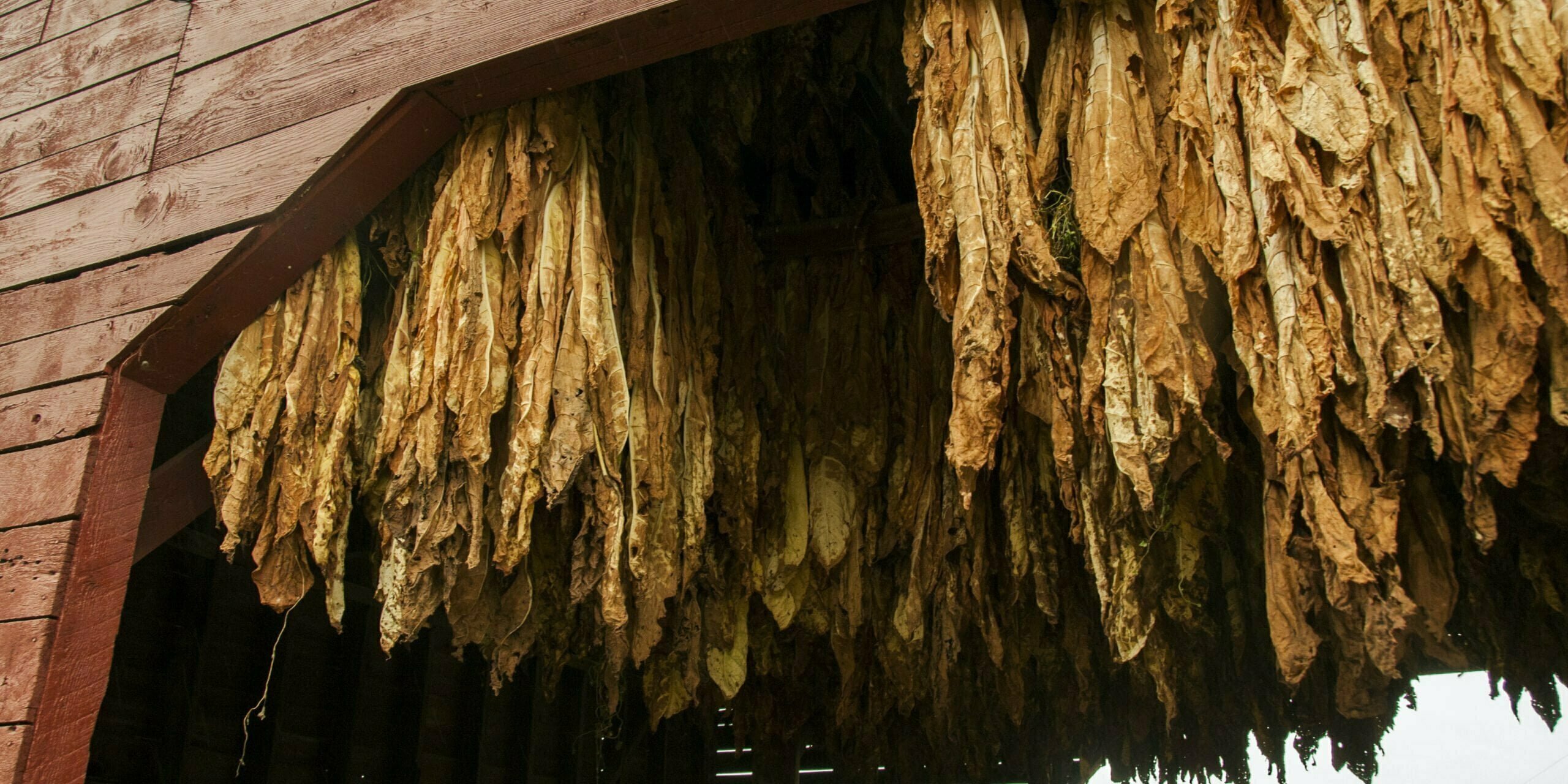
Beginning to buy local was, for Brenda, a choice that was important to her personally. Since that time, she’s found that the Madison County school board has been eager to get local food into the schools, too. The reason that the school board is behind the idea is the same, Brenda says, as the reason that she initially wanted to support the growers in her community: “It’s seeing your neighbors suffer. Suddenly tobacco farmers in your community don’t have any way to make a living, and then anything you can do to help them, and then also to help their children that are in school, is just a humanitarian thing to do.”

The Farm to School program at Madison County Schools has come a long way since the days when Brenda bought leftovers from farmers that walked into her office. In the last three years, Brenda has wrought a close relationship with Dewain Mackey of Madison Farms, an organized group of Madison County farmers that can provide her with food grown inside the county throughout the entire school year. Before the growing season even began, she planned with Dewain to purchase cabbage, sweet potatoes, apples, potatoes, and beef for the school system. Working personally with Dewain has made it possible for her to coordinate purchasing of an increasing amount of local food. “In the early days I bought from individual farmers, and it was really sporadic,” she explains. “Working with Dewain has definitely made it possible for me to buy more local food.” In the first four months of the 2006-2007 school year, already $12,343.70 had been spent on locally grown produce, representing a growing proportion of the $500,000 budget for food that the school system operates on.

Another one of her first ventures into buying local was when a grower came into Brenda’s office with 200 watermelons, needing to get rid of them that day. Brenda’s staff in the cafeteria wasn’t very pleased when she bought them, because they all had to store 50 apiece. “That’s the problem,” Brenda laughs: “farmers want to get rid of their product, get a check and be done with it all in one day. Most of the time it’s just not feasible.”

It was difficult for Brenda to deal with individual farmers by herself, since she is the only staff person in the Child Nutrition Office that handles the work of the entire county school system. “If I had to deal with every individual farmer that I buy from, I probably wouldn’t be able to do it at all,” Brenda says. Working with an established group of farmers makes it possible to plan the school system’s purchases ahead of time, for delivery to be coordinated and consolidated, and for the farmers to provide quantities of food that more nearly approach the scale of the schools system’s food purchases.

There are six schools in the system and 2622 total students, and it’s important that menu items be the same for all the schools. Finding enough locally grown food to supply the entire system is always a difficult issue. “What seems like a lot of produce for someone growing it at home is really not a lot if you have that many students to feed,” says Brenda. “We just killed a beef cow for the school, and Dewain asked me, ‘How do you want this delivered?’” “All at once!” Brenda replied, “this won’t be but one menu’s worth!”

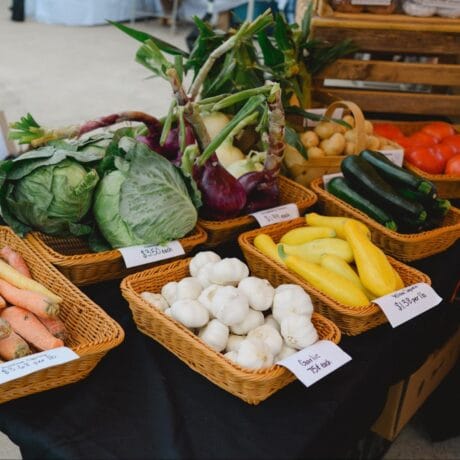
Being creative with the products that she buys locally has helped Brenda to use the products that are available. Since she’s able to plan with Dewain what the Madison Farms’ growers will supply, she can request products that are harvested during the school year or that require less labor to prepare. Then, in addition to the amount that she plans to buy from Madison Farms, she can purchase other products that the farmers grow for other markets, such as squash, tomatoes, and peppers, as availability allows.

With a large quantity of any one thing, it is sometimes difficult to find a way to store or manage it. Dewain had once received a large harvest of sweet potatoes from the Madison Farms’ farmers, and some of the them were up to five pounds each. He asked Brenda what she thought he should do with the potatoes before bringing them to the school. She told him frankly: “I suggest you cut them up, peel them, cook them, mash them, and put them in five-pound bags, because that’s how we’re used to receiving them.” To explain, she added, “If you think about it, school breakfast is over at 8 o’clock. Then you have until 10:30 to get lunch ready. So that’s only two and a half hours that you have to get the meal ready, and with that amount of time you just can’t have a lot of dirt to wash off or a lot of peeling to do. It has to be ready.”

It was important to have the support of her staff in processing the locally grown food as it sometimes requires extra work, or at least different work, than they were used to doing. Initially the cafeteria staff was reluctant to accept the idea, but now, according to Brenda, “My staff is right there beside me on the rollercoaster ride of local food.”

As far as the reaction from the students, Brenda says, “It’s basically school food no matter what you have. They’re not up in arms protesting to get more of it, I’ll tell you that!” The salad bar at the high school has been an unexpected success though, especially the fresh squash and broccoli – which, Brenda notes, “you wouldn’t think high schoolers would like, but they really do!” Depending on what is available from the local growers, the cafeteria workers make a presentation of fresh tomatoes, squash, carrots and celery sticks that have been a hit with the students. “Our local food that we get is very low in sodium, which is something that we have to think about a lot. And it’s also low in fat, so that’s really good for the students.”

In order to make delivery work for all of the farmers that she buys from, Brenda and Dewain have enlisted the help of the driver that delivers the USDA commodity products to the school. The Madison Farms’ growers bring the products from their individual farms to a central location in the county, and the driver picks them up on his way to deliver to the schools.

Overall, Brenda has found that it’s important to stay flexible, to take advantage of the produce that’s available and able to be used, and to continue to remind her staff and other school personnel about why buying local food is important. She makes a point to label the locally grown produce that’s offered in the schools by marking it “Madison Farms Broccoli,” or “Madison Farms Sweet Potatoes”, for example, on the menu that is posted on the Madison County Schools website. “The farmers like to see that there, and the parents like to see it too,” she says.

Working with Dewain and Madison Farms has made the largest impact in her local buying, Brenda says. “I’m really all about Madison County. I deal with Madison Farms because it’s organized and it’s easier, but also because I’m thinking mostly about this county.” The local food movement in western North Carolina is great, says Brenda, but she doesn’t feel that it concerns her very much. For her, buying locally is personally important, but it is also a phenomenon that she is only a part of: it’s a long chain of commitment and work that stretches from the coordination of the farmers to the new work of the cafeteria workers. “I think Dewain was really the one that convinced the school board to start buying from local farmers, and the school board told me that they wanted me to do that, and I’m just the one that made it happen.”

TOP

Home

Send comments or suggestions to webmaster@asapconnections.org

©Copyright 2005 Appalachian Sustainable Agriculture Project
729 Haywood Rd., Asheville, NC 28806 -Join the ASAP E-mail List serve
Voice: 828-236-1282 or fax: 828-236-1280 email: info@asapconnections.org
Appalachian Sustainable Agriculture Project is a 501(c)(3) nonprofit organization.

Google
Search WWW Search asapconnections.org

Click here to Donate Now